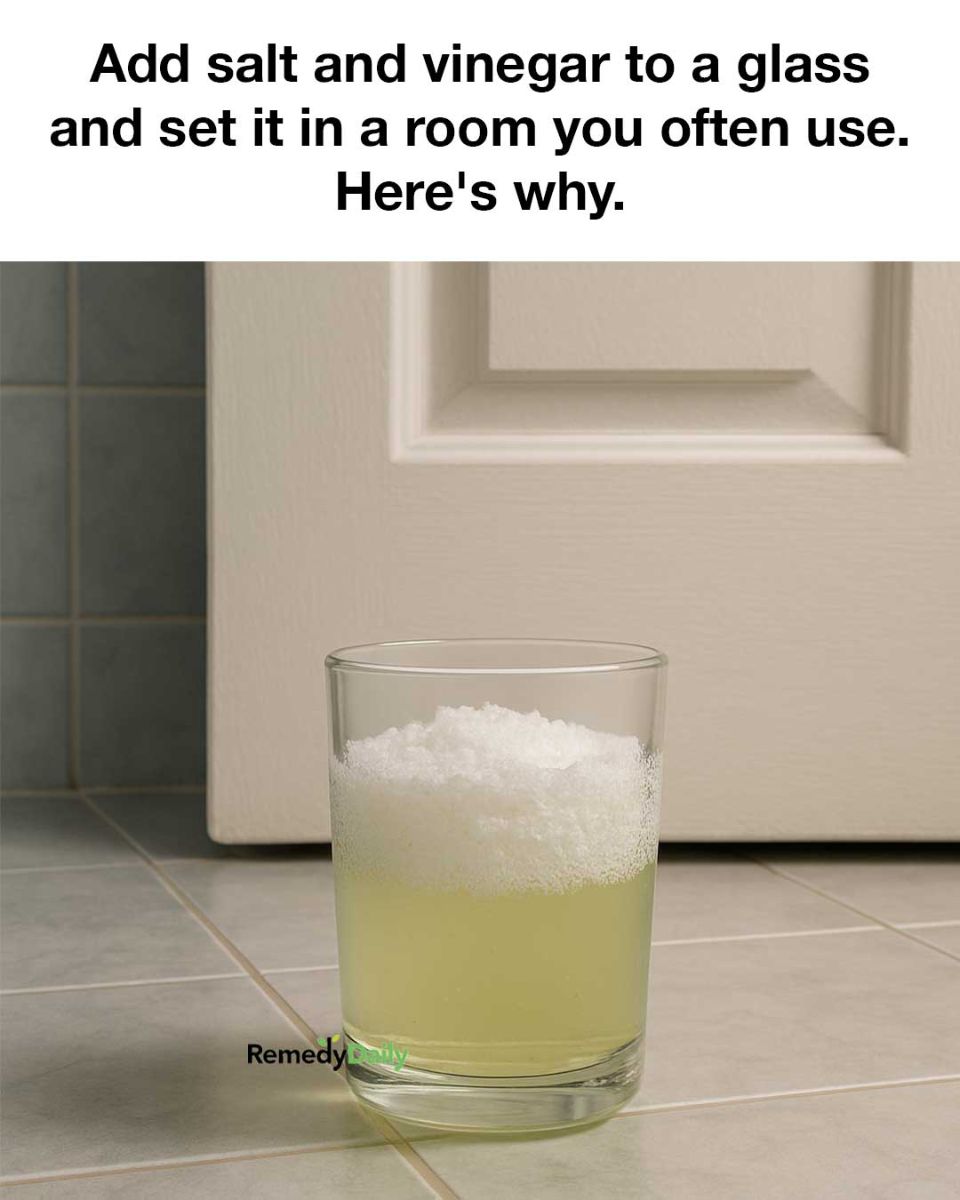
Add salt and vinegar to a glass and set it in a room you often use. Here’s why.
4. Improving Mood with Natural Scents
The scent of vinegar, while not universally loved, can have a refreshing and invigorating effect on some people. The sharpness of vinegar’s scent can help to clear the air and create a sense of cleanliness, which can be uplifting.
Additionally, the act of using natural solutions like salt and vinegar can contribute to a sense of well-being and satisfaction, knowing that you’re using eco-friendly and non-toxic methods to improve your living space. This psychological benefit is an often-overlooked aspect of natural air purification methods.
5. Practical Tips for Setting Up Your Salt and Vinegar Mixture
To set up your salt and vinegar air purifier, you’ll need a glass or shallow dish, white vinegar, and table salt. Start by pouring one cup of vinegar into the container, then add a tablespoon of salt. Stir the mixture until the salt is fully dissolved.
Place the container in a room where you want to improve air quality, such as the kitchen or bathroom. For best results, replace the mixture every few days, as the vinegar will evaporate over time, reducing its effectiveness. Ensure the container is placed in a safe location where it won’t be knocked over easily.
6. Popular Viral Hacks Using Salt and Vinegar
The combination of salt and vinegar has been featured in various viral hacks, from cleaning solutions to pest control. One popular use is as a natural cleaner for removing hard water stains and mineral deposits, thanks to vinegar’s acidity and salt’s abrasive qualities.
Another viral hack involves using salt and vinegar to deter ants and other pests. The strong scent of vinegar can disrupt the scent trails that ants use to navigate, while salt can act as a barrier that pests are reluctant to cross. These hacks highlight the versatility and effectiveness of salt and vinegar beyond air purification.
7. Scientific Evidence Supporting the Claims
While there is anecdotal evidence supporting the use of salt and vinegar for air purification, scientific studies specifically examining their combined effects in this context are limited. However, the individual properties of salt and vinegar are well-documented. For example, studies have shown that acetic acid can effectively kill certain bacteria and viruses on surfaces.
Research into salt’s hygroscopic properties also supports its ability to absorb moisture and potentially reduce airborne allergens. More comprehensive studies are needed to fully understand the efficacy of salt and vinegar as an air purification method, but existing research on their individual properties provides a promising foundation.
