When a Steak Isn’t What It Seems: Why Our First Impressions Can Be Wrong
The human brain is a fascinating machine. In a fraction of a second, it can take in visual information, interpret it, and draw a conclusion. But sometimes, those snap judgments can be hilariously wrong — especially when it comes to food.
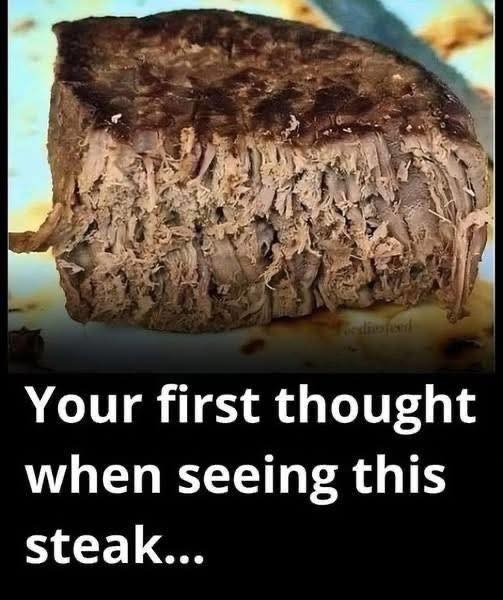
Take, for example, the now-famous image making the rounds on social media: a thick, juicy-looking piece of “steak” with the caption, “Your first thought when seeing this steak…”. At first glance, many people salivate, imagining the tender, flavorful bite of perfectly cooked beef. But then, with a closer look, reality sets in — that’s not quite what it seems.
Why Our Brains Jump to Conclusions
The moment you see the image, your brain goes into recognition mode. This is called pattern recognition — the process by which your mind matches what you see with familiar images stored in memory.
For meat lovers, a thick, brown piece of food with a seared edge instantly registers as steak. It’s the same mechanism that lets you recognize a friend from a distance or identify your favorite snack on a crowded store shelf. But pattern recognition is not always accurate. Sometimes, the brain fills in missing details with assumptions.
The Steak That Wasn’t
Looking closer, that “steak” in the picture isn’t the tender, marbled cut you might expect from a high-end steakhouse. The texture looks more like shredded beef pressed into a patty or even pulled pork shaped into a thick slice.
This mismatch between expectation and reality is what makes the picture so amusing. Our first thought says steak, but our second thought says, Wait a minute… something’s off.
The Role of Lighting and Photography
Part of the confusion comes from the way the image is photographed. Good food photography can make even the simplest dish look like a gourmet masterpiece. In this case, the lighting enhances the browned edges, giving it that “perfectly seared” look we associate with quality steak.
The close-up perspective also hides any context clues — like the rest of the dish or the plate — that might have revealed what it really is. Without those, our minds default to the most familiar, mouth-watering option.
Why Food Illusions Go Viral
Food illusions are a big hit online because they tap into a universal experience: the gap between expectation and reality. Whether it’s a burger that looks massive in the commercial but arrives half the size in real life, or a dessert that turns out to be made of soap, people love to share these moments of surprise.
Psychologists call this the violation of expectation effect. When reality doesn’t match what our brains predicted, it creates a little jolt — and that jolt can be funny, frustrating, or fascinating.
The Humor of Relatability
Part of the humor in this steak picture is that so many people have been “fooled” in similar ways. Maybe you’ve ordered a dish at a restaurant based on a menu photo, only to receive something entirely different. Or perhaps you’ve seen a product online that looked perfect, but when it arrived, it was a disappointment.
These shared experiences create a sense of connection. We laugh not just at the image itself, but at the reminder that we’re all susceptible to the same quick assumptions.
